















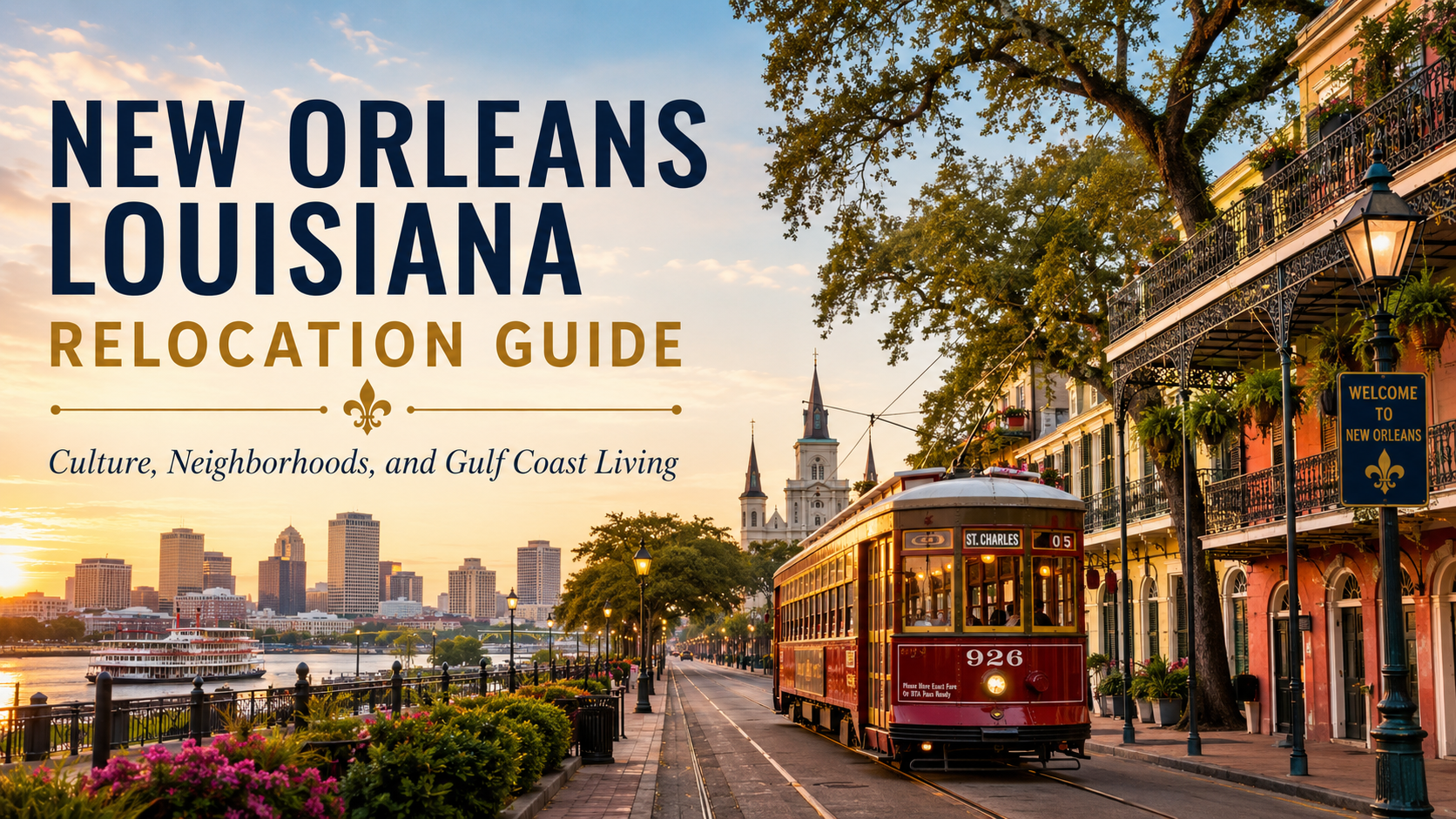
New Orleans, Louisiana offers historic neighborhoods, world-famous culture, major employers, distinctive architecture, and year-round entertainment. Located along the Mississippi River, the city serves as the economic and cultural center of southeastern Louisiana.
The city is known for jazz, Creole cuisine, Mardi Gras, streetcars, festivals, and neighborhood traditions. However, daily life extends far beyond the French Quarter and tourism districts.
New Orleans includes quiet residential streets, university communities, waterfront neighborhoods, historic homes, and modern downtown developments. Therefore, newcomers can choose from many different lifestyles within one city.
Whether you are relocating for work, education, retirement, or culture, this New Orleans Relocation Guide covers important details before moving.
New Orleans is located in southeastern Louisiana near the Mississippi River and Lake Pontchartrain. It serves as the center of the Greater New Orleans metropolitan region.
The city lies approximately:
New Orleans and Orleans Parish share the same boundaries. The U.S. Census Bureau estimated the city’s 2024 population at 362,701.
New Orleans is part of the Greater New Orleans region and the Mississippi River Delta region.
It is also commonly described as part of:
The city’s location connects river commerce, coastal industries, tourism, healthcare, education, and international trade.
New Orleans is surrounded by several cities and suburban communities.
Nearby areas include:
Metairie and Kenner provide suburban housing, shopping, employment, and airport access. Meanwhile, Gretna and Algiers offer additional West Bank living options.
New Orleans attracts people seeking a lifestyle that feels different from most American cities.
The city appeals to professionals, students, healthcare workers, musicians, entrepreneurs, retirees, and hospitality employees.
New Orleans blends French, Spanish, African, Caribbean, Native American, and American influences.
Residents experience culture through:
Culture remains part of daily neighborhood life. Therefore, residents do not need to wait for major tourist events.
New Orleans contains many neighborhoods with recognizable architecture and traditions.
Common home styles include:
However, historic properties may require specialized maintenance and renovation approvals.
New Orleans supports several universities, hospitals, research institutions, and training programs.
The BioDistrict includes LSU Health Sciences Center, Tulane medical programs, University Medical Center, the regional Veterans Affairs hospital, and research organizations.
These institutions support healthcare, education, bioscience, research, and administrative employment.
New Orleans offers concerts, professional sports, museums, theaters, festivals, restaurants, and nightlife.
Additionally, neighborhood events occur throughout the year. These gatherings help newcomers connect with their surrounding communities.
Living costs vary widely by neighborhood, housing type, insurance requirements, and transportation needs.
Housing may appear affordable compared with some major metropolitan areas. However, insurance, utilities, repairs, and flood protection can increase total expenses.
Buyers and renters can find:
Prices usually rise in popular historic areas and near major universities. Meanwhile, homes farther from downtown may offer more space.
Residents should budget for:
Older homes may also bring higher repair expenses.
Insurance deserves careful research before buying a home.
Rates can depend on:
Buyers should request insurance quotes before making a final offer.
New Orleans offers one of the country’s most distinctive housing markets.
However, neighborhood conditions can change within a few blocks. Buyers should research each property and surrounding street carefully.
Uptown includes established neighborhoods, historic homes, universities, parks, and commercial corridors.
Residents enjoy access to:
Homes often include traditional architecture and mature trees. However, prices and renovation costs can be higher.
The Garden District is known for grand homes, tree-lined streets, and historic architecture.
The Lower Garden District offers:
These areas appeal to residents seeking walkability and architectural character.
Mid-City provides a central location near City Park, Bayou St. John, restaurants, and medical employment.
Housing options include:
Streetcars and major roadways connect the neighborhood with downtown and other districts.
Lakeview offers a more suburban residential environment near Lake Pontchartrain and City Park.
Many properties include:
However, buyers should still investigate flood history and elevation.
Gentilly includes several residential neighborhoods near the University of New Orleans and Lake Pontchartrain.
The area offers ranch-style homes, cottages, duplexes, and newer construction. Additionally, some sections provide larger properties than central historic neighborhoods.
The Marigny and Bywater attract residents seeking music, art, historic architecture, and neighborhood restaurants.
Housing includes colorful cottages, shotgun homes, apartments, and renovated properties.
However, nightlife, parking, and visitor activity may affect certain streets.
The French Quarter provides unmatched access to historic architecture, dining, entertainment, and Mississippi River attractions.
Housing primarily includes:
Residents should consider noise, parking, tourism, and historic renovation rules.
These downtown areas offer modern apartments, warehouse conversions, luxury condominiums, restaurants, and entertainment.
Residents can often walk to offices, sporting events, and cultural attractions.
However, downtown parking may add significant monthly costs.
Algiers Point sits across the Mississippi River from downtown.
The neighborhood offers historic homes, quiet streets, local businesses, and ferry access.
RTA operates buses, streetcars, ferries, and paratransit services throughout the region.
New Orleans East covers a large area with subdivisions, apartment communities, commercial corridors, and open land.
Housing can offer more space for the price. However, commute times, services, flood risk, and property conditions require careful evaluation.
The City of New Orleans Property Viewer provides zoning, addressing, neighborhood, and historic-district information.
Buyers should review:
A professional inspection remains especially important for older homes.
Flood risk is one of the most important relocation considerations.
Heavy rainfall can overwhelm drainage systems and flood low-lying streets. NOLA Ready reports that intense rainfall can create several inches of flooding in vulnerable areas.
Flood conditions can differ between nearby blocks.
The city provides a Base Flood Elevation map for property research. Additionally, the Property Viewer helps buyers identify neighborhood and zoning details.
Before purchasing, examine:
Never judge flood risk using neighborhood reputation alone.
Standard homeowners and renters policies usually exclude flood damage.
NOLA Ready encourages property owners and renters to purchase separate flood coverage. The agency also notes that policies may have a 30-day waiting period.
Renters can purchase coverage for furniture, electronics, clothing, and other belongings.
New Orleans relies on pumps, drainage canals, and catch basins to remove stormwater.
However, heavy rainfall can exceed the system’s capacity. NOLA Ready reports 42 local flood events during a recent 20-year period.
Residents should avoid driving through standing water.
Hurricane season affects daily planning and property ownership.
Tropical systems can bring:
NOLA Ready provides official hurricane planning, emergency supply, evacuation, and shelter information.
New Orleans supports a diverse regional economy.
Major employment sectors include:
Healthcare remains one of the region’s largest employment areas.
Major institutions include:
The BioDistrict supports healthcare, research, biotechnology, education, and startup activity.
Tourism supports hotels, restaurants, music venues, attractions, transportation, event production, and convention services.
Employment opportunities can be plentiful. However, schedules may include weekends, nights, holidays, and seasonal changes.
The Mississippi River supports shipping, logistics, warehousing, engineering, and maritime services.
Related employment may involve:
These sectors remain important throughout the broader region.
Universities, public schools, city departments, courts, and state agencies provide additional employment.
Major higher education institutions also support research, administration, maintenance, dining, and student services.
Public education in New Orleans operates differently from many traditional school districts.
NOLA Public Schools serves Orleans Parish and uses a centralized application process for participating public schools.
Families can review schools through the official NOLA Public Schools directory.
The directory includes publicly available schools, early childhood centers, scholarship programs, and state-authorized options.
Families should research:
A nearby school is not always the automatically assigned school.
New Orleans also has numerous private, Catholic, and independent schools.
Tuition, admissions, transportation, and available grades vary. Therefore, families should contact each school directly.
Major colleges and universities include:
These institutions offer undergraduate, graduate, technical, medical, and professional programs.
New Orleans provides extensive healthcare access throughout the city and surrounding suburbs.
Residents can find:
Major medical campuses are located downtown, Uptown, Mid-City, Jefferson, and Metairie.
New Orleans offers everything from neighborhood stores to regional shopping centers.
Popular shopping areas include:
Residents can find boutiques, antique stores, art galleries, grocery stores, national retailers, and specialty shops.
The city’s dining culture includes:
Many well-known restaurants require reservations. Meanwhile, smaller neighborhood establishments often provide more casual dining.
Music venues appear throughout:
Residents can hear jazz, blues, brass bands, funk, rock, hip-hop, and international music.
New Orleans provides cultural and recreational options throughout the year.
Popular attractions include:
Residents enjoy:
Outdoor activities include walking, cycling, kayaking, fishing, tennis, golf, and picnicking.
Major celebrations include:
Festival traffic can affect parking and commuting. Therefore, residents learn to plan around major event schedules.
New Orleans includes highways, surface streets, bridges, streetcars, buses, ferries, bicycle routes, and pedestrian districts.
However, transportation convenience depends heavily on the neighborhood.
Important routes include:
Traffic can increase during festivals, sporting events, conventions, and evacuations.
New Orleans Regional Transit Authority operates:
The system connects neighborhoods with downtown, universities, employment areas, and visitor districts.
The official Le Pass app supports route planning and mobile fare purchases.
Streetcars provide transportation along several well-known corridors.
Major lines serve areas around:
Streetcars can be useful for commuting. However, travel may be slower than driving.
Some neighborhoods provide strong walkability.
Walkable areas include portions of:
Still, sidewalk conditions, heat, storms, and street lighting can vary.
Louis Armstrong New Orleans International Airport is located in Kenner.
The airport connects with Interstate 10 and sits a short drive from downtown and the French Quarter.
Travel time often depends on traffic and the departure neighborhood.
New Orleans has a humid subtropical climate.
The city experiences hot summers, mild winters, heavy rainfall, and a long tropical storm season.
Spring brings warm temperatures, festivals, blooming plants, and outdoor events.
However, thunderstorms and heavy rainfall remain possible.
Summers are hot and extremely humid.
Afternoon temperatures commonly reach the 90s. Additionally, heat indexes can climb much higher.
Reliable air conditioning remains essential.
Early fall remains hot and falls within hurricane season.
Later fall brings cooler weather, festivals, and comfortable outdoor conditions.
Winters are generally mild.
However, occasional freezes and cold fronts can affect homes, roads, and water pipes.
Every relocation destination offers benefits and challenges.
The best choice depends on your neighborhood, budget, commute, and tolerance for coastal risks.
New Orleans can be a rewarding place for residents who value culture, food, music, architecture, and community identity.
The city particularly appeals to:
However, successful relocation requires practical preparation.
Newcomers must understand flood risks, insurance expenses, school enrollment, transportation, and storm planning.
New Orleans offers a rare combination of historic character, creative energy, major institutions, and deeply rooted neighborhood traditions.
Residents enjoy music, festivals, parks, universities, restaurants, and one of America’s most recognizable cultural identities. However, coastal weather, flooding, insurance, and infrastructure require serious planning.
For people prepared for those responsibilities, New Orleans can offer a vibrant and meaningful lifestyle. Its strong sense of place continues attracting residents seeking more than an ordinary city experience.