














Baton Rouge, Louisiana combines state-government careers, university life, riverfront attractions, and established residential neighborhoods. Located along the Mississippi River, the city serves as Louisiana’s capital and a major regional employment center.
Baton Rouge had an estimated population of 222,795 in 2025. Additionally, the city supports healthcare, petrochemical industries, education, construction, logistics, and professional services.
Whether you are moving for work, school, family, or lifestyle, this Baton Rouge Louisiana Relocation Guide covers the essentials.
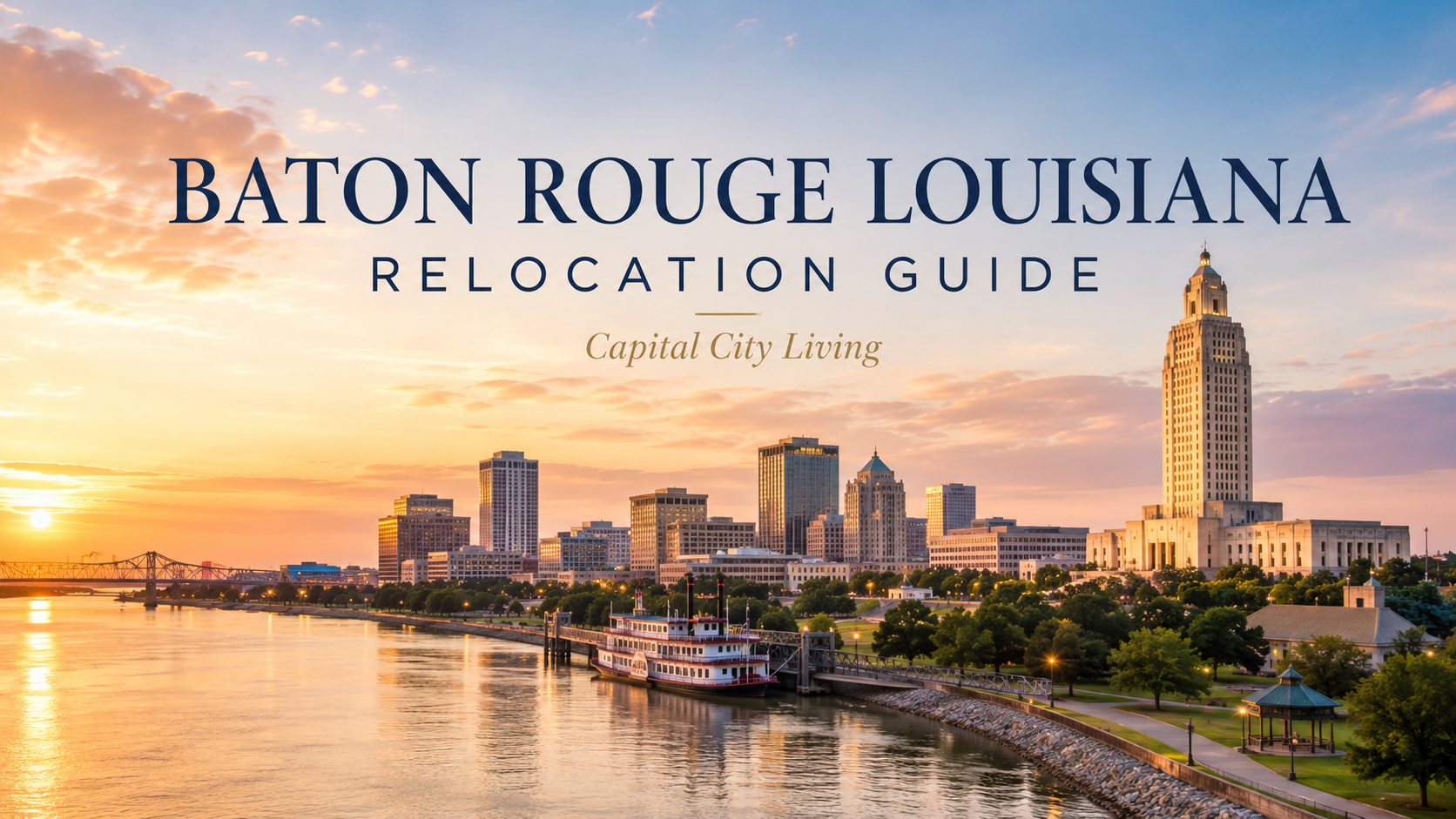
Baton Rouge sits in southeastern Louisiana along the eastern bank of the Mississippi River. New Orleans is approximately 80 miles southeast, while Lafayette is about 60 miles west.
Interstate 10 connects the city with New Orleans, Lafayette, and Houston. Meanwhile, Interstate 12 provides an eastbound route toward Hammond and Mississippi.
Baton Rouge belongs to Louisiana’s Capital Region.
Additionally, the city is commonly associated with:
Because of its central location, residents can reach several major Louisiana cities within a few hours.
Baton Rouge is close to Zachary, Central, Baker, Denham Springs, Prairieville, Gonzales, Port Allen, and Plaquemine.
These communities provide additional housing, schools, and shopping choices. However, river crossings and interstate traffic can affect daily commute times.
Baton Rouge attracts government workers, university employees, healthcare professionals, industrial workers, students, and families.
Additionally, the city offers museums, restaurants, college sports, festivals, and riverfront recreation. As a result, newcomers can combine career access with a distinctive Louisiana lifestyle.
Baton Rouge offers apartments, townhomes, historic houses, suburban homes, and newer developments. Housing expenses vary by neighborhood, flood exposure, property condition, and commute.
Everyday costs include transportation, utilities, insurance, groceries, healthcare, and property taxes. However, flood and homeowners insurance can significantly affect ownership expenses.
Baton Rouge’s housing market includes historic neighborhoods, university-area rentals, suburban subdivisions, and luxury communities.
Because conditions vary between streets, buyers should review flood history, drainage, insurance, school zones, and commute routes before purchasing.
Downtown offers apartments, condominiums, historic buildings, offices, museums, and Mississippi River views.
Residents can walk to government offices, restaurants, cultural attractions, and riverfront spaces. Additionally, Third Street serves as a center for dining and nightlife.
Mid City includes cottages, older homes, apartments, restaurants, and creative businesses.
Government Street has become one of the area’s busiest commercial corridors. Meanwhile, nearby parks and arts venues support an active neighborhood atmosphere.
Spanish Town sits near downtown and the Louisiana State Capitol.
The neighborhood features colorful historic homes, cottages, and a strong community identity. However, older properties may require additional maintenance.
The Garden District offers tree-lined streets, historic homes, duplexes, and convenient access to downtown and LSU.
Because of its central location, the neighborhood appeals to professionals, students, and historic-home buyers.
Southdowns lies between LSU and several major commercial areas.
Housing includes cottages, ranch-style homes, apartments, and renovated properties. Additionally, residents can reach campus, healthcare facilities, and shopping relatively quickly.
Shenandoah offers established subdivisions, larger homes, schools, parks, and suburban streets.
The neighborhood sits in southeastern Baton Rouge. Therefore, residents can access Airline Highway, Interstate 12, and nearby shopping corridors.
The Bluebonnet and Perkins Road areas include apartments, newer subdivisions, offices, restaurants, and shopping centers.
Additionally, these corridors provide access to medical services and major retail destinations. Traffic can become heavy during commuting and shopping hours.
Zachary and Central sit outside Baton Rouge but remain connected to the regional economy.
These communities offer suburban neighborhoods, larger lots, and separate school systems. However, commute times increase for residents working downtown or near LSU.
East Baton Rouge Parish contains approximately 62% of the jobs within the nine-parish metropolitan area. Therefore, the city attracts commuters from across the Capital Region.
Major employment sectors include:
As Louisiana’s capital, Baton Rouge supports state agencies, courts, legislative offices, and administrative departments.
Related careers include finance, legal services, information technology, communications, public safety, and facility operations.
Louisiana State University supports jobs in teaching, research, athletics, healthcare, administration, and campus services.
Additionally, LSU reported $488 million in research activity across its eight campuses during the most recent year cited by the university.
Baton Rouge has hospitals, medical offices, rehabilitation providers, specialty clinics, and senior-care facilities.
As a result, healthcare professionals can find opportunities in nursing, administration, therapy, diagnostics, and patient support.
The Mississippi River corridor supports petrochemical, industrial, logistics, and manufacturing operations.
Additionally, engineering firms, construction companies, transportation providers, and suppliers support these industries.
Most public school students within the city attend East Baton Rouge Parish Schools.
Families should confirm school assignments before selecting a home. The district allows enrollment at assigned or zoned schools and provides separate school-choice options.
East Baton Rouge Parish Schools operates traditional, magnet, specialized, and career-focused programs.
Because enrollment rules differ by program, families should review applications, transportation, attendance zones, and documentation requirements.
Baton Rouge also offers private, religious, charter, and independent schools.
Admissions, tuition, transportation, and grade availability vary. Therefore, families should contact each school directly.
Major higher education options include:
These institutions support academic, technical, healthcare, legal, and workforce programs.
Baton Rouge serves as a major healthcare center for the Capital Region.
Residents can access primary care, pediatric services, emergency medicine, specialty treatment, rehabilitation, cancer care, and senior services.
Additionally, medical facilities are distributed across central, southern, and eastern Baton Rouge.
Baton Rouge offers regional malls, shopping centers, local boutiques, markets, and neighborhood businesses.
Major commercial areas include:
Because shopping areas are spread across the city, vehicle access remains helpful.
Baton Rouge’s dining scene includes Cajun food, Creole dishes, seafood, barbecue, Southern cooking, and international cuisine.
Additionally, local restaurants range from casual neighborhood cafés to upscale dining. The official tourism organization highlights the city’s broad culinary offerings.
Baton Rouge supports museums, theaters, live music, festivals, college sports, and community events.
Downtown includes the Shaw Center for the Arts, LSU Museum of Art, Manship Theatre, and nearby galleries.
Baton Rouge provides museums, historic landmarks, parks, sports, and Mississippi River attractions.
Popular destinations include the Louisiana State Capitol, LSU, Old State Capitol, USS Kidd, and downtown riverfront.
The Louisiana State Capitol stands north of downtown and remains one of the city’s defining landmarks.
Visitors can explore the grounds, gardens, exhibits, and observation areas.
The LSU campus includes historic buildings, live oak trees, museums, athletic facilities, and Mike the Tiger’s habitat.
Additionally, LSU describes its Baton Rouge campus as featuring approximately 1,200 live oaks.
The Mississippi River riverfront offers walking areas, public spaces, museums, and views of passing vessels.
Nearby attractions include the USS Kidd and Louisiana Art and Science Museum.
Residents can enjoy parks, lakes, walking paths, sports fields, golf courses, and nearby nature areas.
Additionally, festivals, markets, and outdoor events occur throughout the year.
Baton Rouge remains largely car-dependent.
Major routes include:
Traffic can become heavy near the Mississippi River Bridge, downtown, LSU, and major interstate interchanges. Therefore, home location can strongly influence commuting time.
The Capital Area Transit System provides bus service within Baton Rouge and East Baton Rouge Parish.
However, service remains more limited than transit systems in larger metropolitan areas. Most households rely on personal vehicles.
Baton Rouge Metropolitan Airport sits north of downtown.
American, Delta, and United connect Baton Rouge with major airline hubs. Additionally, New Orleans International Airport offers more flight options within driving distance.
Baton Rouge has a humid subtropical climate.
Summers are hot, humid, and rainy. Meanwhile, winters are usually mild with occasional freezes.
Heavy rainfall, tropical storms, hurricanes, and flash flooding can affect Baton Rouge.
Therefore, buyers should review flood zones, drainage, previous water damage, and insurance costs for every property.
Baton Rouge can be a practical choice for government workers, university employees, students, healthcare professionals, and industrial workers.
The city combines major employers with cultural attractions, dining, education, and regional services. Additionally, surrounding communities provide more housing and school choices.
However, neighborhood selection remains important. Traffic, flood risk, schools, insurance, and housing conditions vary throughout the area.
Baton Rouge offers a strong combination of government careers, university opportunities, healthcare, culture, and riverfront attractions.
LSU and state government remain central to the city’s identity. Meanwhile, healthcare, manufacturing, logistics, and industrial employers broaden the economy.
For newcomers seeking opportunity within Louisiana’s Capital Region, Baton Rouge deserves serious consideration.